Selecting the ideal carp fishing rod requires careful consideration of various factors. Rod types, lengths, actions, and materials all play vital roles in the overall performance.
Anglers must also factor in their specific fishing conditions and personal preferences. Understanding these elements can greatly enhance the fishing experience.
To navigate this complex decision-making process, one must explore the intricacies of each aspect. What features should be prioritized for best results?
When selecting a carp fishing rod, understanding the various types available is essential for anglers. Carp fishing rods primarily come in three categories: traditional rods, specialist rods, and baitcasting rods. Traditional rods are typically longer and more flexible, allowing for longer casts and better sensitivity in detecting bites.
Specialist rods, designed specifically for carp fishing, offer enhanced strength and durability, accommodating heavier lines and larger weights. These rods often feature specific actions tailored to the techniques used in carp fishing, such as method or surface fishing.
Baitcasting rods, while less common in carp fishing, provide precision and control for anglers who prefer to target specific areas. Each type serves distinct purposes, and the choice largely depends on personal preferences and fishing conditions. Recognizing these differences can help anglers select the most suitable rod for their carp fishing adventures.
Selecting the ideal carp fishing rod involves evaluating several key features that can greatly impact performance. One essential aspect is the rod's material, commonly made from graphite or fiberglass, which affects sensitivity and durability. Sensitivity is important for detecting bites, while durability guarantees the rod withstands the rigors of carp fishing.
Another important feature is the action of the rod, which determines how it bends when under load. Fast action rods provide quick responsiveness, while slow action rods offer a more forgiving bend, necessary for battling larger fish.
The reel seat and guides should also be inspected for quality; these components influence line movement and overall ease of use. Additionally, the rod's weight should be considered to assure comfort during long fishing sessions. Collectively, these features contribute considerably to a successful carp fishing experience, making thorough evaluation essential for anglers seeking the perfect rod.
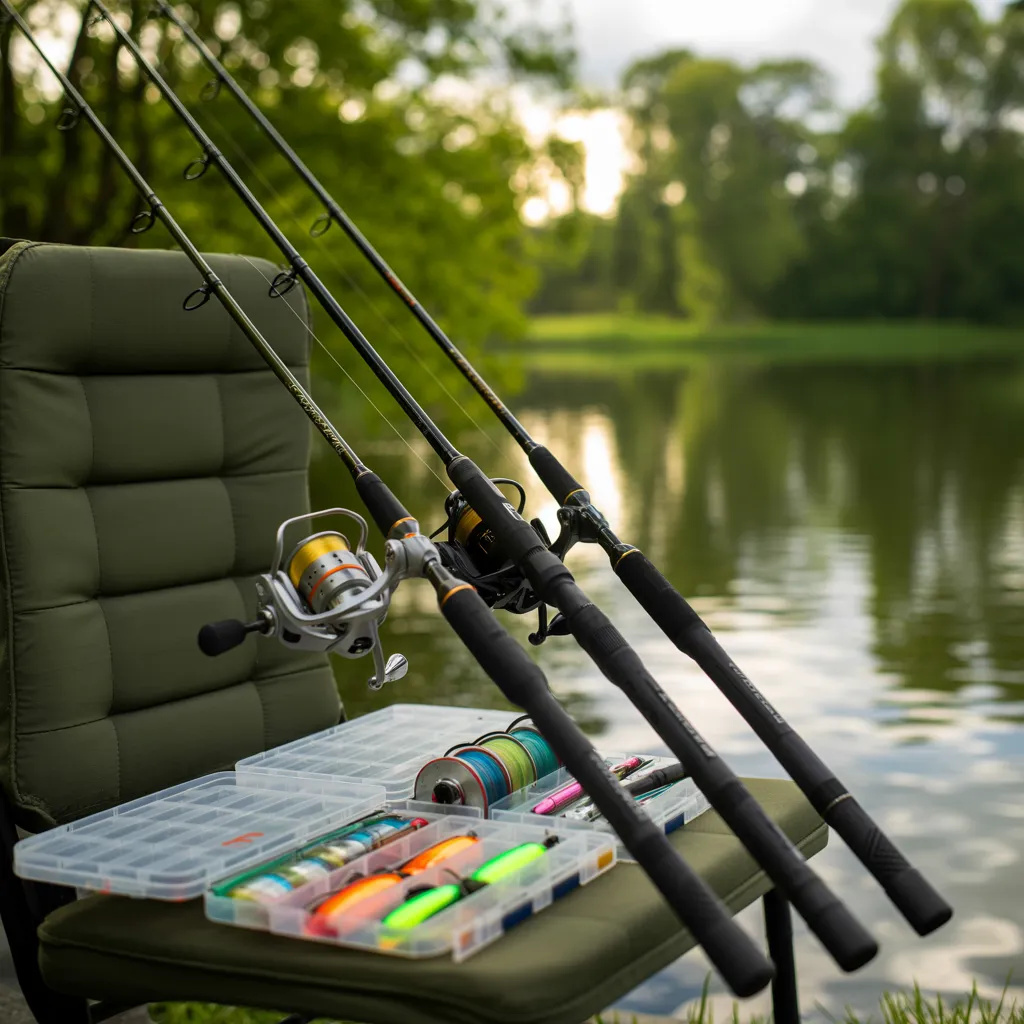
Rod length plays a significant role in determining casting distance, which is essential for effective carp fishing. Longer rods, typically ranging from 10 to 13 feet, allow anglers to cast farther into the water, increasing their chances of reaching fish that are located at greater distances from the bank. This extended reach is particularly beneficial in large lakes or rivers where carp may be lurking out of range of shorter rods.
However, longer rods can be more challenging to maneuver and may require more skill to handle effectively. Conversely, shorter rods, often between 9 and 11 feet, offer better control and accuracy, making them suitable for fishing in tighter spots or when precision is paramount.
Ultimately, the choice of rod length should align with the fishing environment and the angler's specific needs, ensuring an ideal balance between distance and control for successful carp fishing.
Often overlooked by novice anglers, rod action plays an essential role in determining how a fishing rod performs under various conditions. Rod action refers to the flexibility of the rod and affects how it bends when under pressure.
It is categorized into three main types: slow, medium, and fast. A slow action rod bends throughout its length, providing a softer feel, which is beneficial for lighter baits and delicate presentations. Conversely, a fast action rod bends primarily at the tip, offering enhanced sensitivity and quicker hook-setting capabilities.
Medium action rods strike a balance between the two, making them versatile for various fishing techniques. Understanding these distinctions helps anglers select the right rod for their specific carp fishing needs.
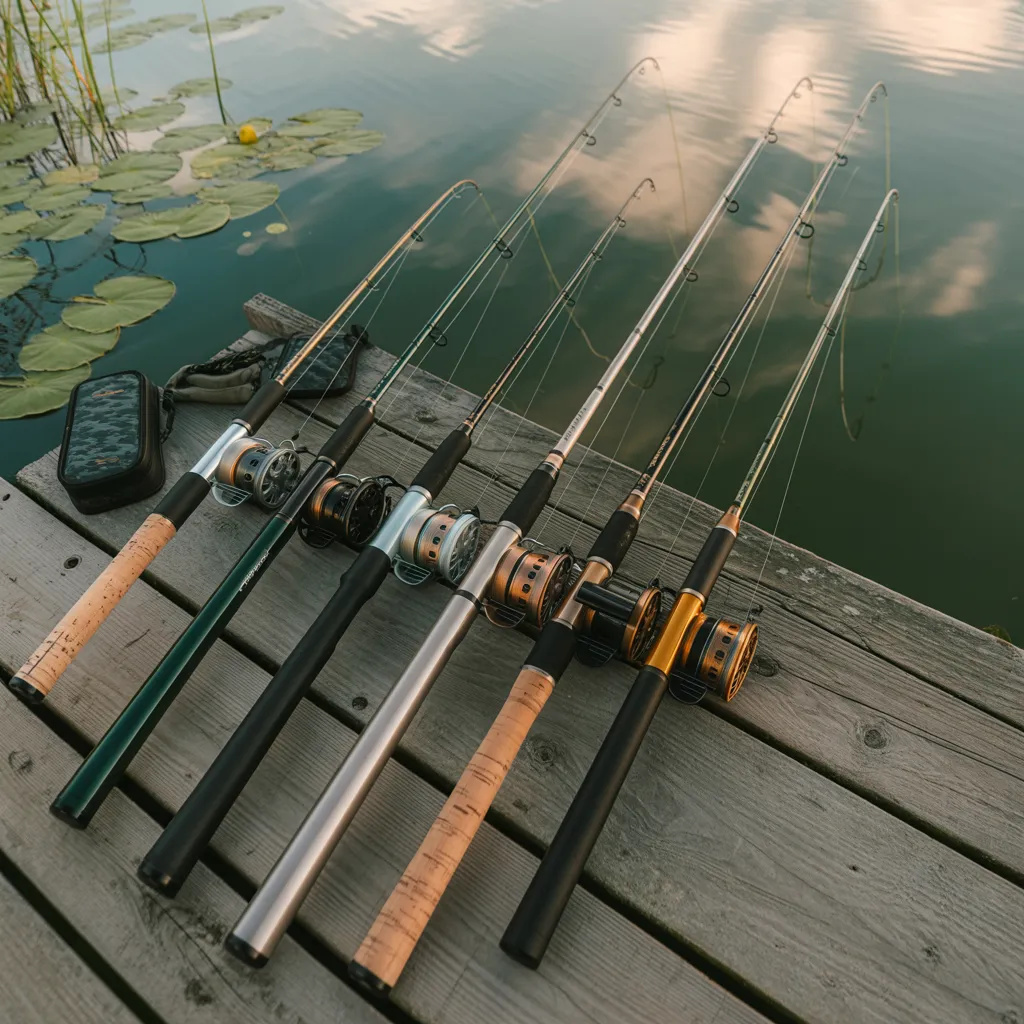
Selecting the right power rating is essential for optimizing carp fishing success. Power ratings indicate the rod's strength and its ability to handle different fish sizes. Typically classified as ultra-light, light, medium, medium-heavy, and heavy, these ratings impact the rod's performance.
A medium power rod is versatile, suitable for various carp sizes, while a heavy power rod is ideal for larger specimens or tough conditions. Action ratings, which describe how a rod flexes, work in tandem with power ratings.
For instance, a fast action rod offers quick responsiveness, making it suitable for precise casting and hook-setting. Understanding these ratings guarantees anglers select a rod tailored to their fishing style, enhancing both effectiveness and enjoyment during carp fishing trips.
When it comes to carp fishing rods, the choice of material greatly influences performance and durability. Common materials include fiberglass and carbon fiber, each offering distinct advantages. Fiberglass rods are known for their strength and flexibility, making them resilient against harsh conditions and suitable for beginners. However, they can be heavier and less sensitive compared to carbon fiber options.
On the other hand, carbon fiber rods are lighter and provide excellent sensitivity, allowing for better bite detection. They typically offer faster action, which can enhance casting distance and accuracy. However, they may be more prone to breakage under extreme stress.
Ultimately, the choice between fiberglass and carbon fiber depends on individual fishing styles and preferences. Anglers should consider factors such as weight, sensitivity, and the specific conditions in which they will be fishing to select the most suitable material for their carp fishing rods.
A carp fishing rod should typically be replaced every three to five years, depending on usage and wear. Regular inspections for damage or reduced performance can also indicate when it's time for a replacement.
Yes, a carp rod can be used for other types of fishing, particularly for species like catfish or larger freshwater fish. However, its specific design may not optimize performance for all fishing scenarios.
Carp fishing sessions typically last between four to eight hours. Anglers often find this duration allows sufficient time for bait to attract fish while maintaining focus and energy, ultimately enhancing the overall fishing experience.